
|
Starting a new topic? Please try and put it in a relevant forum (Riding, Building, etc) but if you're not sure it's better to post in any forum than not to post at all. |
What is the lowest profile helmet in a faired bike |
Post Reply 
|
Page <12 |
| Author | |
RoyMacdonald 
BHPC Member 

Joined: 09 March 2007 Location: Rye East Sussex Status: Offline Points: 981 |
 Post Options Post Options
 Thanks(0) Thanks(0)
 Quote Reply Quote Reply
 Posted: 22 February 2019 at 6:04pm Posted: 22 February 2019 at 6:04pm |
|
You've set me wondering what speed are bike helmets designed for?
The Astana team seem to have some low profile helmets made by Limar  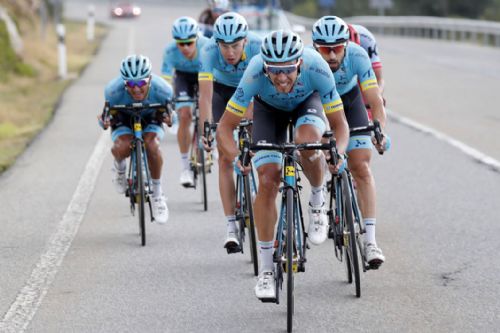 Roy
|
|
 |
|
|
RoyMacdonald
BHPC Member
Joined: 09 March 2007 Location: Rye East Sussex Status: Offline Points: 981 |
Post Options
Thanks(0)
Quote Reply
Posted: 22 February 2019 at 6:16pm |
|
14 mph for bikes and 17 mph for motorbikes.
Under US standards bike helmets are tested in 2 meter drops that achieve about 14 miles per hour (22.5 kph) on the flat anvil. In Europe the drop height is only 1.5 meters. Why so low, when bicyclists frequently exceed 14 mph in forward speed? The typical road or trail bike crash involves a drop to pavement. The important energy in that crash is supplied by gravity, not by forward speed. Although forward speed can contribute some additional energy, the main force is the attraction of gravity, and the impact severity is determined by the height of your head above the pavement when the fall begins. It is gravity that determines how fast your helmet closes with the pavement. Some of the crash energy is often "scrubbed off" by hitting first with other body parts. The typical bicycle crash impact occurs at a force level equating to about 1 meter (3 feet) of drop, or a falling speed of 10 MPH. The rider's forward speed before the crash may be considerably higher than that, but the speed of the head closing with the ground, plus a component of the forward speed, less any energy "scrubbed off" in other ways, normally average out at about 10 MPH. So bike helmets are tested with a 2 meter (6.56 feet) drop. Motorcycle helmets are tested at 3 meters, about 17 mph. A really good bicycle helmet can handle that. As a 2009 study shows, helmets prevent between 63 and 88 per cent of brain injuries. Those are good odds. But that means that helmets did not prevent all brain injury for 12 to 37 percent of the riders. They are optimized to prevent life-threatening catastrophic brain injury, not the milder forms of concussion. If they are softened to prevent mild concussions they will compress too fast and bottom out in the more severe impacts. Today's helmets may or may not be perfect in striking the balance, but we know they work well. Still, every bike helmet sold in the US has a sticker inside warning you that "no helmet can protect the wearer from all foreseeable impacts." That sticker is required by law. |
|
|
|
|
Woolly Hat
BHPC Member
Joined: 12 May 2017 Status: Offline Points: 151 |
Post Options
Thanks(0)
Quote Reply
Posted: 24 May 2019 at 11:52am |
|
Wow, Roy! That's not good if you miss the ground and forward momentum causes your head to impact a stationary object in the direction of travel. Especially on a motorbike. But using your example, does this mean a low recumbent, faired or not would give you a greater chance of avoiding brain injury with a standard helmet due to the proximity to the ground?
Could this be another benefit of riding low recumbents?
|
|
|
Ross Low Racer 77 and WozzaMarauder
|
|
|
|
|
RoyMacdonald
BHPC Member
Joined: 09 March 2007 Location: Rye East Sussex Status: Offline Points: 981 |
Post Options
Thanks(0)
Quote Reply
Posted: 24 May 2019 at 1:02pm |
|
Yes, that had not escaped my conclusion. Low racers are safer and less affected by side winds as well. Coming off a low racer is much gentler than coming off a motorbike at a similar speed speaking from experience.
Roy
|
|
|
|
|
AlanGoodman
Admin Group 

Club Chairman Joined: 04 March 2005 Location: United Kingdom Status: Offline Points: 8036 |
Post Options
Thanks(0)
Quote Reply
Posted: 24 May 2019 at 2:42pm |
|
It's a compromise. A motorcycle helmet would give greater protection but if you tried cycling up a hill in one on a hot day you would fry your brains... Cycle helmets were never designed to protect you in an impact with a car - just falling and hitting a kerb etc. There are circumstances where a helmet may actually make injuries worse, due to increased rotational forces. The roll-off (Oblique Impact) test introduced into BS6658 (the old British Standard for motorcycle helmets) in the late 80s and carried forward into Reg 22 helped with that because it meant vents, visor fittings etc had to snap off... |
|
|
|
|
|
|
|
Post Reply
|
Page <12 |
| Tweet |
| Forum Jump | Forum Permissions You cannot post new topics in this forum You cannot reply to topics in this forum You cannot delete your posts in this forum You cannot edit your posts in this forum You cannot create polls in this forum You cannot vote in polls in this forum |


 Topic Options